Vacuum Blood Collection Red serve as very accurate instruments for the gathering, moving, and handling of blood in clinical and hospital laboratories. Their structure keeps the samples intact for precision testing in hematology, immunology, and clinical chemistry. The sterile and pre-measured additive construction is a barrier against contamination and sample degradation. The color-coded caps and volume markings make identification and workflow easy. Consistent and reproducible results are obtained by hospitals and laboratories with the use of Vacuum Blood Collection Red, which in turn leads to fewer mistakes and faster diagnosis. These tubes have become necessary for the quality and reliability of clinical diagnostics in modern healthcare environments.

Infectious disease units utilize Vacuum Blood Collection Red to obtain blood for detection of pathogens, serology, and molecular diagnostics. Their sterile construction along with chemical additives help in the stabilization of samples for the testing process thus giving accurate results. Hospital personnel place colored caps on the tubes according to a code indicating the assays to which the tubes are assigned, thus facilitating prompt processing and lessening the risk of contamination. Tubes are compatible with automated analyzers which makes them a part of the efficient workflow in high-demand environments. The use of Vacuum Blood Collection Red in these units allows healthcare facilities to keep a constant and prompt detection of infections thus providing a better patient safety and support in the infection control protocols as well.
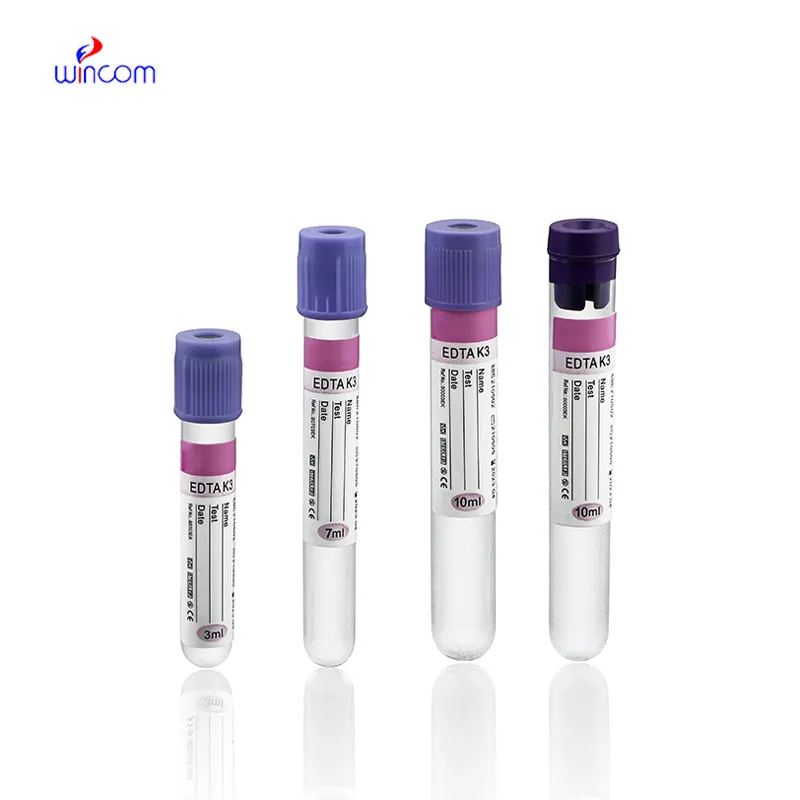
The evolution of Vacuum Blood Collection Red will surely bring small and light designs for field hospitals, mobile clinics, or decentralized laboratory testing. Tubes will likely be improved with better ventilation to withstand harsh temperatures and rough handling during transport, thus providing reliable sample collection even out of the classic hospital settings. These tubes might be given to hospitals for emergency or community testing programs. Advanced pre-measured additives and color-coded identification will preserve accuracy even in non-traditional settings. Future Vacuum Blood Collection Red will feature already mentioned characteristics plus compatibility with automated analysis systems ensuring flexible clinical as well as research workflows.

The care procedures for Vacuum Blood Collection Red focus on hygiene and expert handling of the samples in clinical environments. To avoid contamination, tubes must be taken out of their packaging only at the time of use. The laboratory personnel should ensure that the boxes containing the tubes are not subjected to the weight of heavy objects on top to avoid deformation. Areas for storage need to be controlled so that there is no excessive vibration or humidity. Staff in the hospital are trained to check the tubes by looking for cracks, color changes, or broken seals before the tubes are used. Following these methods aids the process of keeping samples unaltered and, consequently also lab analysis being accurate in the different hospital departments.
In blood banks and transfusion centers, Vacuum Blood Collection Red are the main components in the process of collecting and storing the blood samples from donors for compatibility tests and for screening infectious diseases. The blood samples are taken and put into tubes with anticoagulants that inhibit coagulation and keep the cells in a living state. The correct labeling and the proper treatment of the samples assure their identification throughout the whole donation process. The staff trusts Vacuum Blood Collection Red to keep the samples in good condition while doing serological and molecular tests. Their manufacturing allows for both manual and automated laboratory processes, thus they are very important for the safe transfusion of blood and delivery of compatible blood products to patients in hospitals.
Q: What is the role of vacuum technology in Blood Collection Tubes? A: Enabling a gentle but efficient controlled access to collect blood. Q: Is it possible that Blood Collection Tubes may affect the findings of the results in the laboratory? A: The introduction of Blood Collection Tubes negates some opportunities for sample integrity that supports laboratory results, assuming the correct tube usage. Q: Are Blood Collection Tubes suitable for long-distance transportation? A: They are indeed, with proper handling, storage, and keeping the sample integrity intact during transportation. Q: What steps does the laboratory follow to limit the occurrences of errors related to Blood Collection Tubes? A: Such measures would involve a checklist for collecting blood tubes, separate place for test tubes, all needles, and components (color-coded), shade for answered tubes with samples that are white for identification, identifying sample containers, reordering tube trays, discard policies, labeling, color codes, or sample. Q: What is required for Blood Tube manufacturing? A: The production process must comply with the rules and regulations applicable to medical devices and diagnostics?
The delivery bed is well-designed and reliable. Our staff finds it simple to operate, and patients feel comfortable using it.
The centrifuge operates quietly and efficiently. It’s compact but surprisingly powerful, making it perfect for daily lab use.
To protect the privacy of our buyers, only public service email domains like Gmail, Yahoo, and MSN will be displayed. Additionally, only a limited portion of the inquiry content will be shown.
I’d like to inquire about your x-ray machine models. Could you provide the technical datasheet, wa...
Hello, I’m interested in your centrifuge models for laboratory use. Could you please send me more ...
E-mail: [email protected]
Tel: +86-731-84176622
+86-731-84136655
Address: Rm.1507,Xinsancheng Plaza. No.58, Renmin Road(E),Changsha,Hunan,China


 EN
 af
 es
 ar
 tr
 sw
 pt
 th
 ur
 bn
 ne
 vi
 km
 lo
 de
 ru
 fi
 nl
 fa
 fr
 ko