In hospitals and medical research facilities, capillary blood collection tubes price have become a global standard for blood sampling and transport. The production of the tubes takes place under very stringent quality controls which guarantee sterility and chemical uniformity. They are employed by hospitals for a variety of diagnostic tests, such as screening for infectious diseases, performing hormone panels and routine blood counts. Their pre-filled additives allow for the prevention of clotting or degradation of components, thus maintaining the integrity of each sample. The communication with laboratory machines like centrifuges and analyzers makes the workflow smoother. The use of capillary blood collection tubes price in different medical areas not only minimizes the chances of mistakes but also improves the safety of patients and ultimately leads to the provision of accurate test results in both hospital and research environments.

Infectious disease units utilize capillary blood collection tubes price to obtain blood for detection of pathogens, serology, and molecular diagnostics. Their sterile construction along with chemical additives help in the stabilization of samples for the testing process thus giving accurate results. Hospital personnel place colored caps on the tubes according to a code indicating the assays to which the tubes are assigned, thus facilitating prompt processing and lessening the risk of contamination. Tubes are compatible with automated analyzers which makes them a part of the efficient workflow in high-demand environments. The use of capillary blood collection tubes price in these units allows healthcare facilities to keep a constant and prompt detection of infections thus providing a better patient safety and support in the infection control protocols as well.
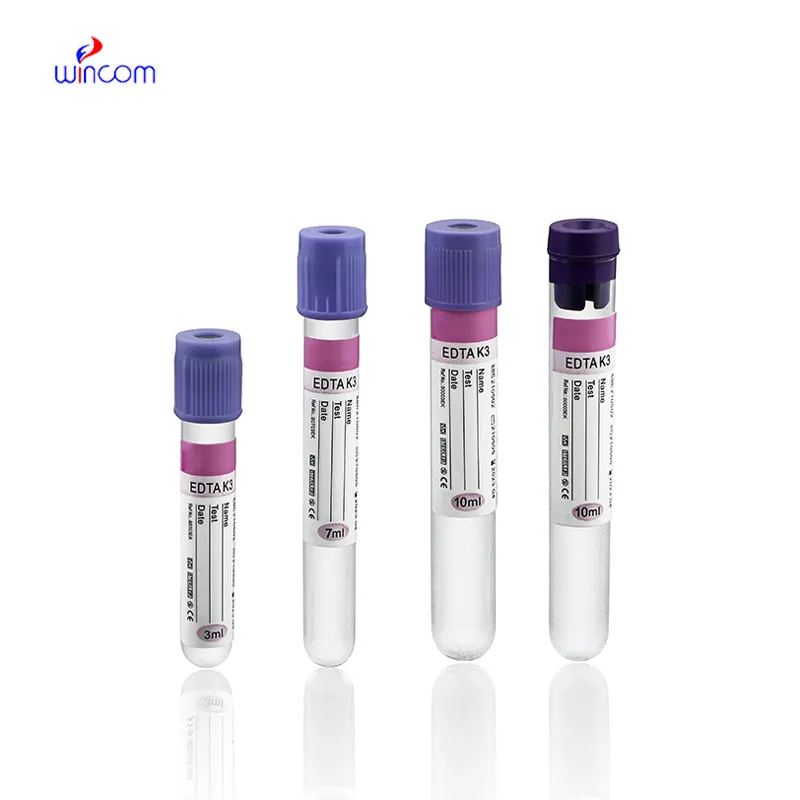
capillary blood collection tubes price might witness inventive strides in additive technology enabling multi-functional testing from just one blood collection. The tubes could be designed in such a way that they would have substances that maintain the samples for both hematology and biochemical assays, hence making it unnecessary to have multiple blood draws. The hospitals and laboratories will enjoy smooth operation, less patient discomfort, and reduced pre-analytical variability as their main advantages. Cutting-edge monitoring systems might keep an eye on sample conditions and warn personnel in case of any changes. The next capillary blood collection tubes price will not only magnify operational efficiency but also improve diagnostic reliability thus paving the way for integrated hospital laboratory operations and modern clinical research protocols.

The care standards for capillary blood collection tubes price prioritize sterility and environmental safety. The tubes should be stored in the original packaging until they are needed for the patient. The laboratory should have clean air supply to minimize the risk of contamination. Refreshers for the staff are done regularly to make sure everyone knows how to handle and dispose of materials correctly. Hospitals can have different storage places for tube types to reduce the possibility of mix-ups. Adhering to these maintenance guidelines, healthcare facilities are able to deliver the same quality of tubes, secure the patients' safety, and keep the laboratory diagnostics at a high level.
capillary blood collection tubes price find their application in clinical chemistry laboratories for the testing of metabolic, hormonal, and enzymatic markers with the highest precision. Most of the time, these tubes are already filled with substances such as clot activators, gel separators, or anticoagulants to make sure that the samples remain intact. Laboratory personnel depend on such tubes for the processes of automatic centrifugation, separation, and analysis. The proper treatment of capillary blood collection tubes price eliminates pre-analytical errors and provides uniformity in the results of multiple tests. Their shape allows for effective workflow in not only high-capacity hospital laboratories but also in specialized testing facilities, hence assisting in timely diagnosis and treatment planning for patients.
Q: What is the purpose of Blood Collection Tubes in emergency departments? A: The main function is to facilitate quick and secure blood collection for urgent diagnostic tests. Q: Are Blood Collection Tubes suitable for infants and children? A: Absolutely, there are specialized smaller-volume tubes for both pediatric and neonate applications. Q: What is the procedure when a Blood Collection Tube gets broken? A: The broken tubes cannot be used and should be disposed of per the hospital's rules. Q: Will Blood Collection Tubes leak if there is an accident? A: Leakage during handling and transport is minimized through the secure caps that are designed for these tubes. Q: What methods do hospitals use for tracking Blood Collection Tubes? A: A number of hospitals are using either labeling or barcode systems for sample identification and traceability.
The delivery bed is well-designed and reliable. Our staff finds it simple to operate, and patients feel comfortable using it.
We’ve used this centrifuge for several months now, and it has performed consistently well. The speed control and balance are excellent.
To protect the privacy of our buyers, only public service email domains like Gmail, Yahoo, and MSN will be displayed. Additionally, only a limited portion of the inquiry content will be shown.
We are planning to upgrade our imaging department and would like more information on your mri machin...
Could you please provide more information about your microscope range? I’d like to know the magnif...
E-mail: [email protected]
Tel: +86-731-84176622
+86-731-84136655
Address: Rm.1507,Xinsancheng Plaza. No.58, Renmin Road(E),Changsha,Hunan,China


 EN
 af
 es
 ar
 tr
 sw
 pt
 th
 ur
 bn
 ne
 vi
 km
 lo
 de
 ru
 fi
 nl
 fa
 fr
 ko