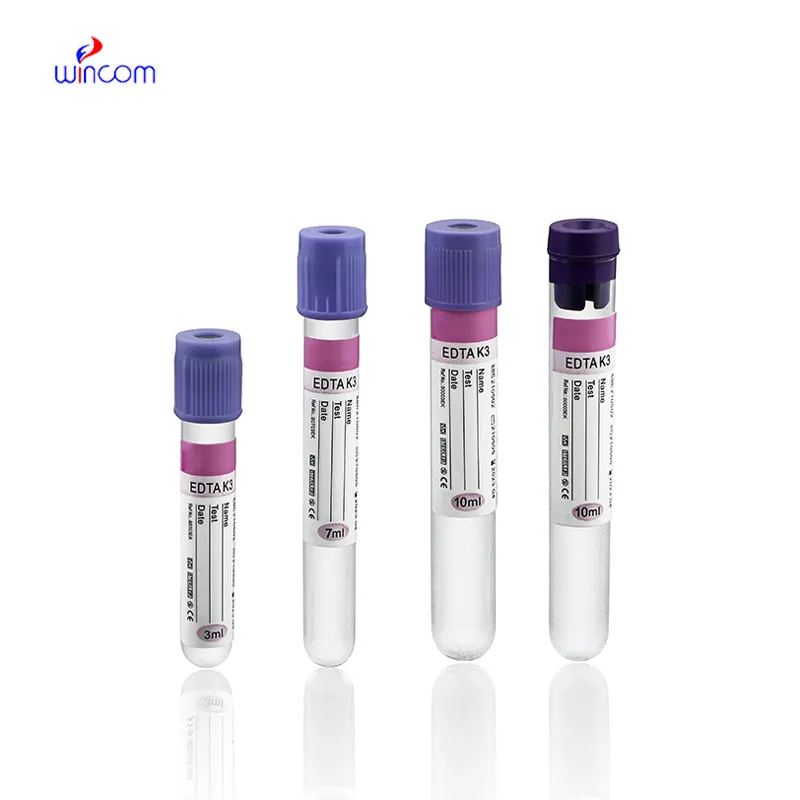
color code for blood collection tubes are the most important parts of the process in a hospital and clinical laboratory, which are primarily used to offer safe and controlled blood collection. Each tube is capable of preserving the chemical as well as the cellular composition of the sample for accurate tests. The additives are made suitable for different types of tests like hematology, chemistry, or coagulation assays. The color-coded caps and the volume markings are very helpful for the laboratory staff to easily identify and handle the materials correctly. In the case of working with centrifuges, analyzers, and barcode systems, color code for blood collection tubes play a major role in accelerating hospital workflows. Their trustworthy structure guarantees that blood samples are free from any contamination and can be traced, thus providing support for regular diagnostic results and smooth laboratory operations.

color code for blood collection tubes are utilized in clinical chemistry laboratories for the automated testing of metabolic, enzymatic, and hormonal markers. The use of pre-filled additives like clot activators or anticoagulants help in maintaining the quality of the sample so that it can be analyzed with precision. Moreover, the tubes have compatibility with high-throughput centrifuges and analyzers, which results in the optimization of laboratory operations. The proper labeling and color-coding practices not only enhance traceability but also minimize pre-analytical errors. The use of color code for blood collection tubes by laboratories will enable them to obtain reliable and reproducible results over different assays, thereby assisting in diagnosis, treatment planning and patient monitoring in both hospital and research settings with a high degree of accuracy.
color code for blood collection tubes might witness inventive strides in additive technology enabling multi-functional testing from just one blood collection. The tubes could be designed in such a way that they would have substances that maintain the samples for both hematology and biochemical assays, hence making it unnecessary to have multiple blood draws. The hospitals and laboratories will enjoy smooth operation, less patient discomfort, and reduced pre-analytical variability as their main advantages. Cutting-edge monitoring systems might keep an eye on sample conditions and warn personnel in case of any changes. The next color code for blood collection tubes will not only magnify operational efficiency but also improve diagnostic reliability thus paving the way for integrated hospital laboratory operations and modern clinical research protocols.

The care procedures for color code for blood collection tubes focus on hygiene and expert handling of the samples in clinical environments. To avoid contamination, tubes must be taken out of their packaging only at the time of use. The laboratory personnel should ensure that the boxes containing the tubes are not subjected to the weight of heavy objects on top to avoid deformation. Areas for storage need to be controlled so that there is no excessive vibration or humidity. Staff in the hospital are trained to check the tubes by looking for cracks, color changes, or broken seals before the tubes are used. Following these methods aids the process of keeping samples unaltered and, consequently also lab analysis being accurate in the different hospital departments.
color code for blood collection tubes are typically employed for blood collection in a matter of seconds in emergency rooms and ICU. The different colors of their caps are a sign of what kind of additive is present inside, thus making it easier for the doctors to choose the right tube for tests such as coagulation, blood chemistry, or infectious disease markers, etc. Also, these tubes can be used with vacuum-based systems for blood draw, thus providing safe and efficient collection even in hard situations. The accurate labeling and proper handling of color code for blood collection tubes greatly reduce the chance of mix-ups between samples and make it possible to trace them back, thereby supporting the timely diagnostic decisions which are very important for urgent patient care in high-pressure hospital environments.
Q: What is the purpose of Blood Collection Tubes in emergency departments? A: The main function is to facilitate quick and secure blood collection for urgent diagnostic tests. Q: Are Blood Collection Tubes suitable for infants and children? A: Absolutely, there are specialized smaller-volume tubes for both pediatric and neonate applications. Q: What is the procedure when a Blood Collection Tube gets broken? A: The broken tubes cannot be used and should be disposed of per the hospital's rules. Q: Will Blood Collection Tubes leak if there is an accident? A: Leakage during handling and transport is minimized through the secure caps that are designed for these tubes. Q: What methods do hospitals use for tracking Blood Collection Tubes? A: A number of hospitals are using either labeling or barcode systems for sample identification and traceability.
The microscope delivers incredibly sharp images and precise focusing. It’s perfect for both professional lab work and educational use.
The centrifuge operates quietly and efficiently. It’s compact but surprisingly powerful, making it perfect for daily lab use.
To protect the privacy of our buyers, only public service email domains like Gmail, Yahoo, and MSN will be displayed. Additionally, only a limited portion of the inquiry content will be shown.
We’re interested in your delivery bed for our maternity department. Please send detailed specifica...
I’m looking to purchase several microscopes for a research lab. Please let me know the price list ...
E-mail: [email protected]
Tel: +86-731-84176622
+86-731-84136655
Address: Rm.1507,Xinsancheng Plaza. No.58, Renmin Road(E),Changsha,Hunan,China


 EN
 af
 es
 ar
 tr
 sw
 pt
 th
 ur
 bn
 ne
 vi
 km
 lo
 de
 ru
 fi
 nl
 fa
 fr
 ko