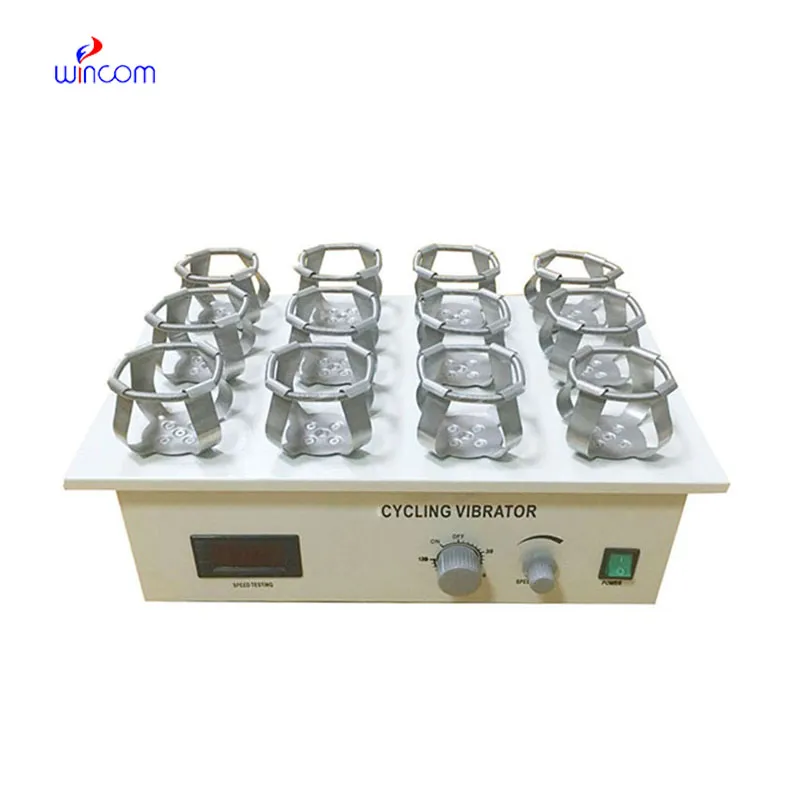
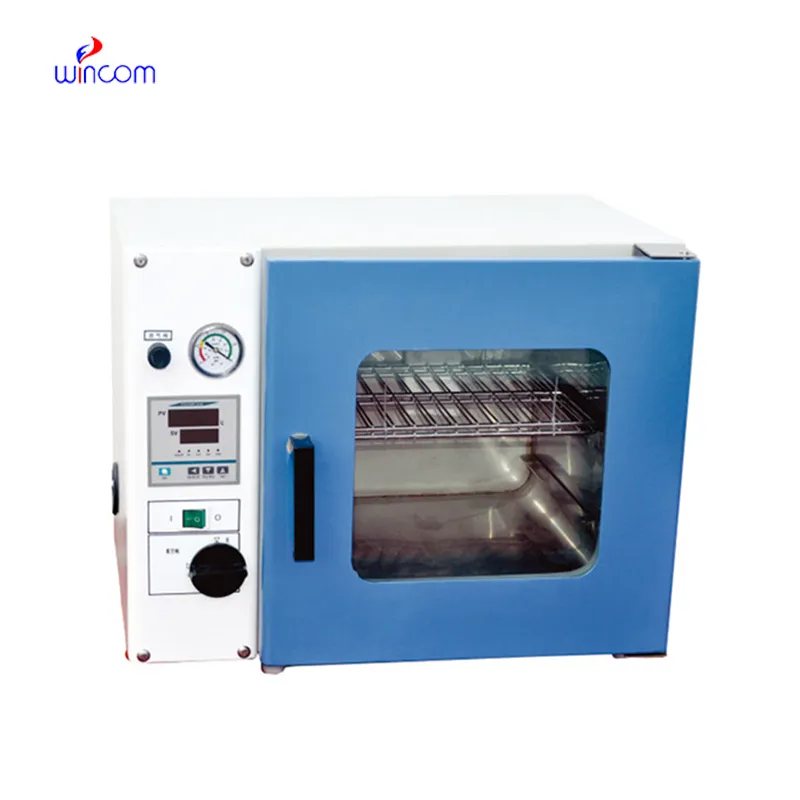
Made for regulated heating processes, the laboratory temperature controlled water bath is endowed with high-performance and long-lasting durability. Double-insulated to eliminate heat loss, the high-precision thermostat provides level water temperature. The digital reading of the laboratory temperature controlled water bath makes it easy to control and maintain. Protective features that shield against low water level and temperature overload are present in the laboratory temperature controlled water bath. Compact and solid, the device accommodates various laboratory procedures. The laboratory temperature controlled water bath provides stability and performance necessary for temperature-sensitive laboratory experimental processes.

The laboratory temperature controlled water bath finds application wherever reproducible experimental findings are needed in controlled heating. In life science, it maintains enzymes and samples at specific temperatures during incubation. In small chemical labs, it is utilized to evaporate solvents, crystallize materials, and investigate the rate of reactions. School laboratories also employ the laboratory temperature controlled water bath in teaching vital laboratory concepts. Its even heat ensures that laboratory specimens are treated uniformly for higher accuracy in data. The laboratory temperature controlled water bath helps maintain consistency in research, enabling scientists to achieve stable conditions necessary for precise analysis.

The next generation of the laboratory temperature controlled water bath will combine the newest digital innovation with sustainable design. Better microprocessor systems will increase temperature accuracy, and integrated IoT capabilities will enable live monitoring and control via mobile or desktop interfaces. Next-generation models will be focused on energy conservation and user safety, with self-off and water level alerts becoming intelligent. The laboratory temperature controlled water bath will become a smart lab device, enhancing efficiency, accuracy, and adaptability in different research applications.

For effective operation, the laboratory temperature controlled water bath requires frequent servicing. Cleaning and draining of the water chamber daily in order to eliminate sediment and biofilm. The use of filtered or deionized water prevents deposits. The heaters, seals, and gaskets must always be inspected for wear. Cleaning with a damp cloth on the outer surface with care. Scheduling calibration of the temperature control system ensures continuous accuracy. Regularly maintained laboratory temperature controlled water bath offers consistent heating performance and optimizes working life under operating laboratory conditions.
The laboratory temperature controlled water bath is a device that is normally applied to heat samples gradually and uniformly under temperature regulation. The instrument is an essential part of laboratories for offering stable thermal conditions for reactions, culture media preparation, and activation of enzymes. Water circulating within the laboratory temperature controlled water bath facilitates the transfer of heat uniformly to prevent overheating. Most models come with digital readouts to allow for precise temperature measurement and simple adjustment. The laboratory temperature controlled water bath can accommodate a broad scope of scientific uses where precise control of temperature improves experimental accuracy and replicability.
Q: What temperature range can a laboratory water bath typically achieve? A: Most laboratory water baths operate between ambient temperature and approximately 100°C, allowing precise control for a variety of experiments. Q: How does a water bath ensure even heating across samples? A: The circulation of water, either by convection or a built-in stirrer, ensures uniform temperature distribution throughout the chamber. Q: Why should a water bath be calibrated regularly? A: Regular calibration ensures temperature accuracy, preventing errors that could affect the results of sensitive laboratory processes. Q: What materials are commonly used in constructing a water bath? A: High-quality stainless steel is typically used for the inner chamber to resist corrosion and ensure durability under continuous heating. Q: How can overheating be prevented when using a water bath? A: Many modern units feature automatic temperature cutoffs and alarms that activate if the set temperature exceeds safe limits.
I’ve used several microscopes before, but this one stands out for its sturdy design and smooth magnification control.
The delivery bed is well-designed and reliable. Our staff finds it simple to operate, and patients feel comfortable using it.
To protect the privacy of our buyers, only public service email domains like Gmail, Yahoo, and MSN will be displayed. Additionally, only a limited portion of the inquiry content will be shown.
We are planning to upgrade our imaging department and would like more information on your mri machin...
We’re currently sourcing an ultrasound scanner for hospital use. Please send product specification...
E-mail: [email protected]
Tel: +86-731-84176622
+86-731-84136655
Address: Rm.1507,Xinsancheng Plaza. No.58, Renmin Road(E),Changsha,Hunan,China


 EN
 af
 es
 ar
 tr
 sw
 pt
 th
 ur
 bn
 ne
 vi
 km
 lo
 de
 ru
 fi
 nl
 fa
 fr
 ko