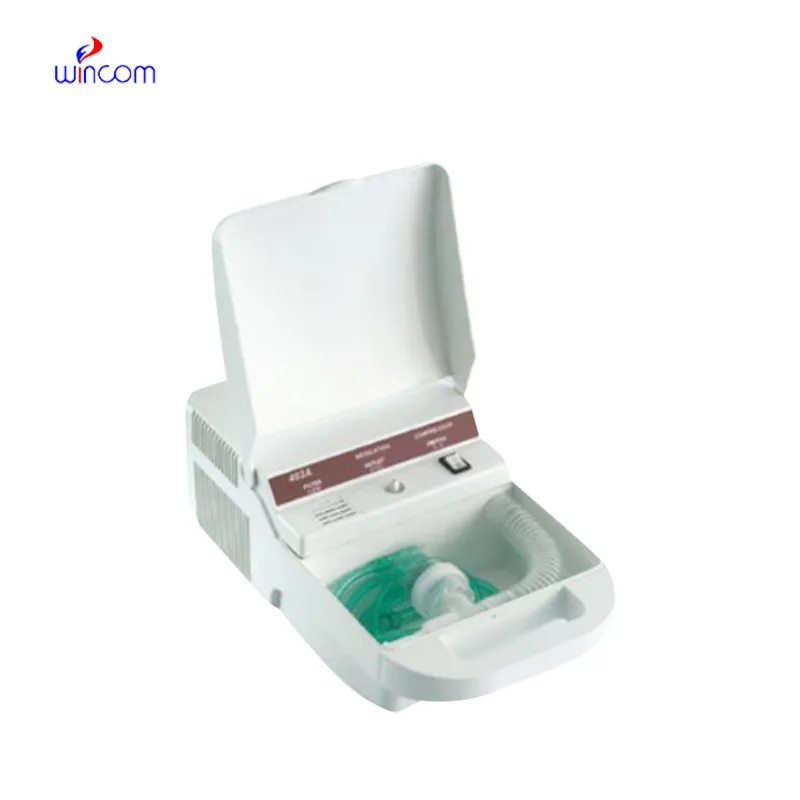
Made for the laboratory environment where accuracy is needed, the laboratory water baths ensures effective temperature maintenance and smooth heat exchange. Its intelligent control panel makes easy programming of settings and real-time temperature monitoring possible. The inner compartment, made of top-quality stainless steel, withstands corrosion and chemical stains. The laboratory water baths is quiet, energy-conserving, and constant in performance regardless of continuous operation. Its built-in protection features avoid overheat and guarantee the safety of the user. Simple to maintain and energy efficient, the laboratory water baths enhances laboratory productivity and experimental reproducibility.

The laboratory water baths finds application wherever reproducible experimental findings are needed in controlled heating. In life science, it maintains enzymes and samples at specific temperatures during incubation. In small chemical labs, it is utilized to evaporate solvents, crystallize materials, and investigate the rate of reactions. School laboratories also employ the laboratory water baths in teaching vital laboratory concepts. Its even heat ensures that laboratory specimens are treated uniformly for higher accuracy in data. The laboratory water baths helps maintain consistency in research, enabling scientists to achieve stable conditions necessary for precise analysis.

Future technology of laboratory water baths will be aimed at automation, digital precision, and sustainability. Artificial intelligence system with integration will predict the optimal heating parameters for different applications. Smart sensors will provide real-time temperature balance, and data connectivity will link the laboratory water baths to universal laboratory management systems. Additional progress in insulation and material efficiency will conserve power. Future laboratory water baths will provide scientists with improved control, increased reproducibility, and improved operation safety in every laboratory environment.

Keeping the laboratory water baths in good condition enhances efficiency and safety. The users must periodically clean the inner chamber to remove mineral residues or deposits. Clean with distilled or pure water to prevent buildup and allow faultless function. Regularly check temperature calibration for accuracy consistency. Never fill the bath over capacity and make sure the lid seal is not damaged. Keep the laboratory water baths drained, dry, and in a dustless area when they are not being used to prevent corrosion and contamination.
Designed for precise temperature regulation, the laboratory water baths ensures steady heating during scientific processes. It is largely used in laboratories for incubation of samples, thawing reagents, or heating solutions in precise conditions. The laboratory water baths features a heavy-duty construction and rust-resistant interiors to ensure durability and sterility. Its digital interface allows users to set and hold precise temperatures with precise accuracy. Quiet operation and uniform temperature stability make the laboratory water baths a trustable device for repeated laboratory use.
Q: What temperature range can a laboratory water bath typically achieve? A: Most laboratory water baths operate between ambient temperature and approximately 100°C, allowing precise control for a variety of experiments. Q: How does a water bath ensure even heating across samples? A: The circulation of water, either by convection or a built-in stirrer, ensures uniform temperature distribution throughout the chamber. Q: Why should a water bath be calibrated regularly? A: Regular calibration ensures temperature accuracy, preventing errors that could affect the results of sensitive laboratory processes. Q: What materials are commonly used in constructing a water bath? A: High-quality stainless steel is typically used for the inner chamber to resist corrosion and ensure durability under continuous heating. Q: How can overheating be prevented when using a water bath? A: Many modern units feature automatic temperature cutoffs and alarms that activate if the set temperature exceeds safe limits.
The hospital bed is well-designed and very practical. Patients find it comfortable, and nurses appreciate how simple it is to operate.
The water bath performs consistently and maintains a stable temperature even during long experiments. It’s reliable and easy to operate.
To protect the privacy of our buyers, only public service email domains like Gmail, Yahoo, and MSN will be displayed. Additionally, only a limited portion of the inquiry content will be shown.
We’re looking for a reliable centrifuge for clinical testing. Can you share the technical specific...
I’d like to inquire about your x-ray machine models. Could you provide the technical datasheet, wa...
E-mail: [email protected]
Tel: +86-731-84176622
+86-731-84136655
Address: Rm.1507,Xinsancheng Plaza. No.58, Renmin Road(E),Changsha,Hunan,China


 EN
 af
 es
 ar
 tr
 sw
 pt
 th
 ur
 bn
 ne
 vi
 km
 lo
 de
 ru
 fi
 nl
 fa
 fr
 ko