remote vital sign monitoring in hospitals offers integrated monitoring features to track heart rhythms and vital signs. The apparatus is intended to maintain a stable data stream and an easily readable output, which allows for good clinical assessment. Its deployment in different hospital units bolsters the constant monitoring process and facilitates uniform patient watching during the different phases of treatment.

remote vital sign monitoring is being used in cardiac diagnostic departments for the purpose of short-term monitoring and diagnosis. ECG recordings are very helpful in making the cardiovascular evaluation during testing and follow-up visits. This particular use of the technology helps the doctors to gather organized heart data in a controlled environment which in turn helps the diagnostic processes in the hospital.

The future of remote vital sign monitoring will be characterized by better data security and traceability features. The secure storage and limited access to ECG records will aid in compliance with regulations and the protection of patient data. Such advancements will support the credibility of digital monitoring systems in hospitals and clinical laboratories.
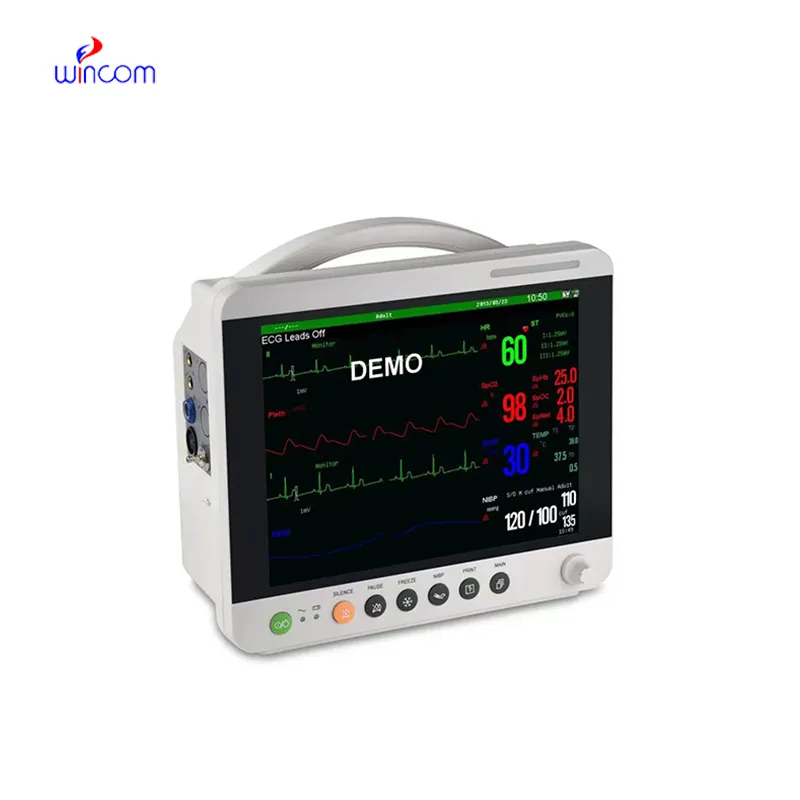
The appropriate remote vital sign monitoring handling is initially by disinfecting surfaces and display-mounts routinely with hospital-grade disinfectants. Regular checks of sensors, wires, and ECG leads for possible wear or damage should be conducted. It is necessary to keep the machinery in a controlled environment to avoid the threats of moisture, dust, or vibration. Moreover, frequent software updates will help in keeping the data processing accurate and the alarm working reliably. Adherence to systematic maintenance schedules is the way to ensure the precision of the measurement, the support of long-term functionality, and the reliability of remote vital sign monitoring as an instrument spread over hospital wards, ICUs, and clinical labs.
In clinical research and laboratory-based medical studies, remote vital sign monitoring serves as a means for physiological data collection and analysis. The ECG recording functions enable the researchers to record the heart activities under controlled conditions. This data is used for cardiovascular studies, treatment evaluation, and medical training programs. remote vital sign monitoring is improving the reliability of research in hospital-based laboratories and academic medical centers by providing stable and accurate measurements.
Q: How often should ECG electrodes be replaced? A: Signal detection accuracy depends on the regular replacement of electrodes. Q: Can a Patient Monitor & ECG be used in neonatal care? A: Certainly, the use of specialized sensors allows safe monitoring of newborns and infants. Q: Does a Patient Monitor & ECG provide alarm functions? A: Alarms are indeed present, with notifications sent to the staff in case of abnormal heart rates or any other vital sign changes. Q: Can it record trends over time? A: It can indeed show historical data for patient analysis and clinical evaluation. Q: Is maintenance required for a Patient Monitor & ECG? A: Long-term performance and accuracy depend on regular maintenance and cleaning which are appropriate for the equipment.
I’ve used several microscopes before, but this one stands out for its sturdy design and smooth magnification control.
We’ve been using this mri machine for several months, and the image clarity is excellent. It’s reliable and easy for our team to operate.
To protect the privacy of our buyers, only public service email domains like Gmail, Yahoo, and MSN will be displayed. Additionally, only a limited portion of the inquiry content will be shown.
We are planning to upgrade our imaging department and would like more information on your mri machin...
Hello, I’m interested in your water bath for laboratory applications. Can you confirm the temperat...
E-mail: [email protected]
Tel: +86-731-84176622
+86-731-84136655
Address: Rm.1507,Xinsancheng Plaza. No.58, Renmin Road(E),Changsha,Hunan,China


 EN
 af
 es
 ar
 tr
 sw
 pt
 th
 ur
 bn
 ne
 vi
 km
 lo
 de
 ru
 fi
 nl
 fa
 fr
 ko